
Month: November 2026
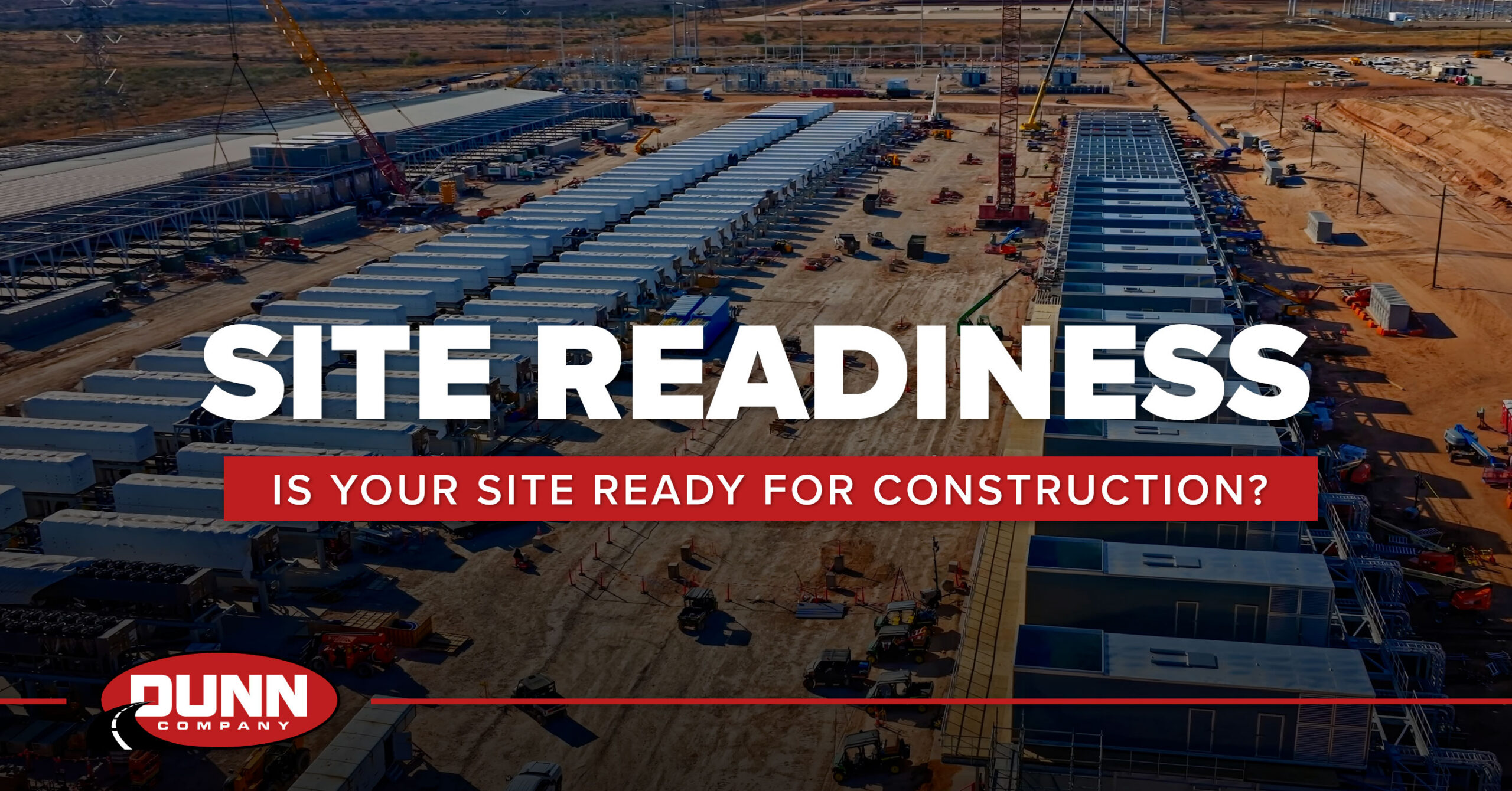
Before Equipment Arrives: Is Your Project Site Ready?
Construction schedules depend on preparation. Crews, equipment, materials, and subcontractors must arrive in the right sequence to keep a project moving. But even a well-organized construction schedule can run into problems when the ground isn’t ready to support the work.
For large commercial developments, industrial facilities, and wind-energy projects, site conditions can influence everything from equipment access to construction sequencing.
Weak or unstable soils may limit where heavy equipment can operate, create difficulties for material deliveries, or require additional work before construction can proceed.
That’s why evaluating site conditions before mobilization is an important part of project planning.
The question isn’t simply whether equipment can reach the site. It’s whether the ground can reliably support the construction activity that follows.
Why Ground Conditions Matter Before Construction Begins
Large development projects place significant demands on the ground long before the finished facility or infrastructure is operational.
Heavy equipment must travel across the site. Trucks need dependable access for material deliveries. Temporary construction roads may carry repeated loads, while staging areas must support equipment and materials throughout different phases of construction.
These activities can expose ground conditions that aren’t always obvious during initial site evaluations.
A site may appear accessible under dry conditions but become difficult to navigate after rainfall. An existing aggregate access road may accommodate occasional traffic but struggle under repeated heavy loads.
When these conditions aren’t addressed early, contractors may need to adjust access routes, perform additional site preparation, or modify construction sequencing.
For developers and project managers, those challenges can affect more than the ground itself. They can influence how efficiently the entire project progresses.
Five Warning Signs Your Site May Need Additional Preparation
Not every site requires soil stabilization. However, certain conditions should prompt a closer evaluation before heavy equipment and construction traffic arrive.
1. Soft or Unstable Ground
Visible rutting, pumping, or excessive movement under vehicle loads can indicate that the existing soil lacks sufficient support for the intended construction activity.
These conditions may be especially noticeable when trucks or equipment repeatedly travel over the same area.
If the ground cannot adequately support construction traffic, additional preparation may be necessary before work continues.
2. Poor Drainage or Persistent Wet Areas
Water can significantly influence soil behavior.
Areas that remain wet after rainfall, collect standing water, or experience recurring drainage problems deserve attention during site planning.
Some soils lose strength when moisture conditions change, potentially creating difficulties for equipment access and construction operations.
Understanding both soil conditions and drainage is important when evaluating the appropriate preparation method.
3. Repeated Rutting Along Construction Access Routes
Construction access roads often experience concentrated traffic from loaded trucks and heavy equipment.
When these routes begin to rut or deform, the problem may extend beyond the surface material.
Adding aggregate may improve some access conditions, but it does not necessarily correct weak underlying soils.
Repeated deterioration can be a sign that the supporting ground needs further evaluation.
4. Variable Soil Conditions Across the Site
Large developments rarely have perfectly uniform ground conditions.
Soil characteristics can change across relatively short distances, creating areas with different support capabilities.
One portion of a site may perform adequately while another experiences excessive deformation or difficulty supporting equipment.
Identifying these variations early can help project teams determine where additional preparation may be needed.
5. Heavy Construction Loads Are Expected
Some projects place unusually high demands on temporary access roads, equipment staging areas, and construction working surfaces.
Wind-energy developments are a good example.
Transporting turbine components and supporting crane operations can involve substantial equipment and vehicle loads. Industrial developments, large commercial projects, and data center construction can also require dependable access for heavy construction activity.
These conditions make it important to evaluate whether existing soils and planned access routes are suitable for the anticipated loads.
Questions to Ask Before Heavy Equipment Mobilizes
Site readiness should be part of early project planning, not a problem addressed only after equipment encounters difficult ground.
Developers, general contractors, and project managers should consider several questions before major construction activity begins.
What do we know about the existing soils?
Geotechnical investigations, soil testing, and available site documentation can provide important information about subsurface conditions.
Where will heavy equipment and material deliveries travel?
Construction access routes should be evaluated based on anticipated traffic, vehicle loads, and frequency of use.
Will the same access routes be needed throughout construction?
An access road supporting initial earthwork may later need to accommodate heavier equipment or different construction activities.
How will weather affect access and working conditions?
Seasonal moisture changes and rainfall can influence soil strength and the reliability of temporary construction surfaces.
Are there areas where the existing ground may require improvement?
Identifying potential problem areas before mobilization allows the project team to evaluate preparation methods and incorporate the necessary work into construction planning.
These questions can help reveal whether the site is ready for the planned construction activity or whether additional ground improvement should be considered.
Soil Stabilization vs. Excavation and Replacement
When weak or unsuitable soils are identified, project teams must determine how to address them.
One traditional approach is excavation and replacement. This involves removing unsuitable material and replacing it with material that meets the project’s requirements.
Depending on the conditions, this may be the appropriate solution.
However, excavation and replacement can also involve substantial material handling, hauling, disposal, and placement of replacement material.
Soil stabilization offers another option worth evaluating.
Stabilization involves improving the engineering properties of existing soils through an appropriate treatment process. Depending on soil characteristics and project requirements, stabilization may improve the soil’s ability to support construction activity and the intended pavement or working surface.
Rather than automatically removing and replacing large quantities of material, stabilization may allow suitable existing soils to be improved in place.
Potential advantages can include:
- Reduced excavation and material removal
- Less demand for imported replacement material
- Reduced hauling requirements
- Improved support for construction access and working areas
- More efficient use of suitable existing site materials
These benefits depend on actual site conditions, treatment design, material availability, and project requirements.
Stabilization is not the correct solution for every soil or application. Proper evaluation and testing are necessary to determine whether it can achieve the required performance.
For developers and contractors, the important consideration is evaluating the available options before committing to a particular method.
Wind Projects: Why Construction Access Deserves Early Attention
Wind-energy projects create unique site preparation challenges.
Turbine locations may be spread across large rural areas, requiring construction traffic to move between public roads, temporary access routes, staging areas, and individual turbine sites.
These routes must accommodate equipment and deliveries throughout construction, sometimes across existing agricultural ground or roadways that were not originally designed for that level of activity.
Weak soils, changing moisture conditions, and repeated heavy loads can create access challenges if they are not addressed during planning.
For wind-project managers, evaluating access-road conditions and soil improvement options early can help support construction sequencing and reduce the likelihood of unexpected ground-related interruptions.
The same principle applies to large industrial and commercial developments where construction activity depends on dependable access across substantial sites.
Project Example: Dunn Company’s Panther Grove Work
Dunn Company’s work on the Panther Grove project provides a relevant example of how pavement rehabilitation and soil stabilization can support rural infrastructure associated with wind-energy development.
The documented project involved full-depth reclamation (FDR), soil stabilization, and rural roadway improvements, with heavy-equipment access among the important project considerations.
Projects of this type illustrate why existing roadway and soil conditions deserve attention when infrastructure must accommodate construction activity beyond its typical use.
Full-depth reclamation and soil stabilization address different aspects of the infrastructure. FDR can rehabilitate an existing pavement structure by reclaiming and reusing pavement materials, while soil stabilization can improve underlying soil conditions where appropriate.
The selection of either method depends on the existing materials, required performance, and project design.
At Panther Grove, Dunn’s involvement demonstrates its experience with the types of pavement and ground-improvement work relevant to renewable-energy infrastructure.
Project-specific construction sequencing, material quantities, cost comparisons, and schedule outcomes should be confirmed before making additional claims about the project’s results.
Early Planning Creates More Options
One of the most important advantages of evaluating site conditions early is having time to consider the appropriate solution.
When weak ground is discovered after major equipment has mobilized, the project team may have fewer options for adjusting the construction approach without affecting other activities.
Earlier evaluation allows engineers, contractors, and developers to assess potential ground-improvement methods as part of the overall construction plan.
That may involve soil stabilization, excavation and replacement, additional aggregate, drainage improvements, or a combination of methods.
The objective is not to specify stabilization on every project. It’s to identify the actual ground conditions and select an approach that supports the work ahead.
For large developments, this also means considering temporary construction needs alongside the requirements of permanent roads, pavement, and infrastructure.
Preparing the Ground for What’s Next
A successful construction project depends on more than the structures and infrastructure being built.
It also depends on the conditions that allow crews, equipment, and materials to reach the work and operate safely and efficiently.
Weak soils, inadequate access routes, and unexpected ground conditions can create challenges long before the finished project takes shape.
Evaluating those conditions early gives developers, general contractors, and project managers an opportunity to identify potential issues, consider appropriate solutions, and plan construction activities with greater confidence.
Dunn Company provides soil stabilization, full-depth reclamation, and related infrastructure capabilities for projects where ground conditions and access requirements are important considerations.
Planning a large development or wind project? Talk with Dunn early about site conditions and stabilization options.
Frequently Asked Questions
How do you know if a construction site needs soil stabilization?
Look for rutting, pumping, soft ground, persistent moisture problems, or insufficient support for anticipated equipment loads. Geotechnical evaluation and testing are needed to determine whether stabilization is appropriate.
Can soil stabilization reduce the need for excavation and replacement?
In suitable conditions, stabilization can improve existing soils in place, potentially reducing the amount of material that must be excavated, hauled away, and replaced. The appropriate approach depends on soil properties and project requirements.
When should soil stabilization be considered during construction planning?
Ideally, before major equipment mobilization and access-road construction. Early evaluation gives project teams more opportunity to compare ground-improvement options and coordinate the work with the construction schedule.
Why is soil stabilization important for wind farm construction?
Wind projects can require dependable access for heavy equipment and component deliveries across rural terrain. Stabilization may improve unsuitable soils where necessary to support construction access and related infrastructure.
Does every construction site with weak soil need stabilization?
No. Excavation and replacement, drainage improvements, aggregate construction, or other ground-improvement methods may be more appropriate depending on the soil conditions, loading requirements, and engineering design.
Stay Connected
For more information and to stay up to date on projects, industry information, and construction methods, follow Dunn Company online on Facebook, Instagram, YouTube, and LinkedIn.
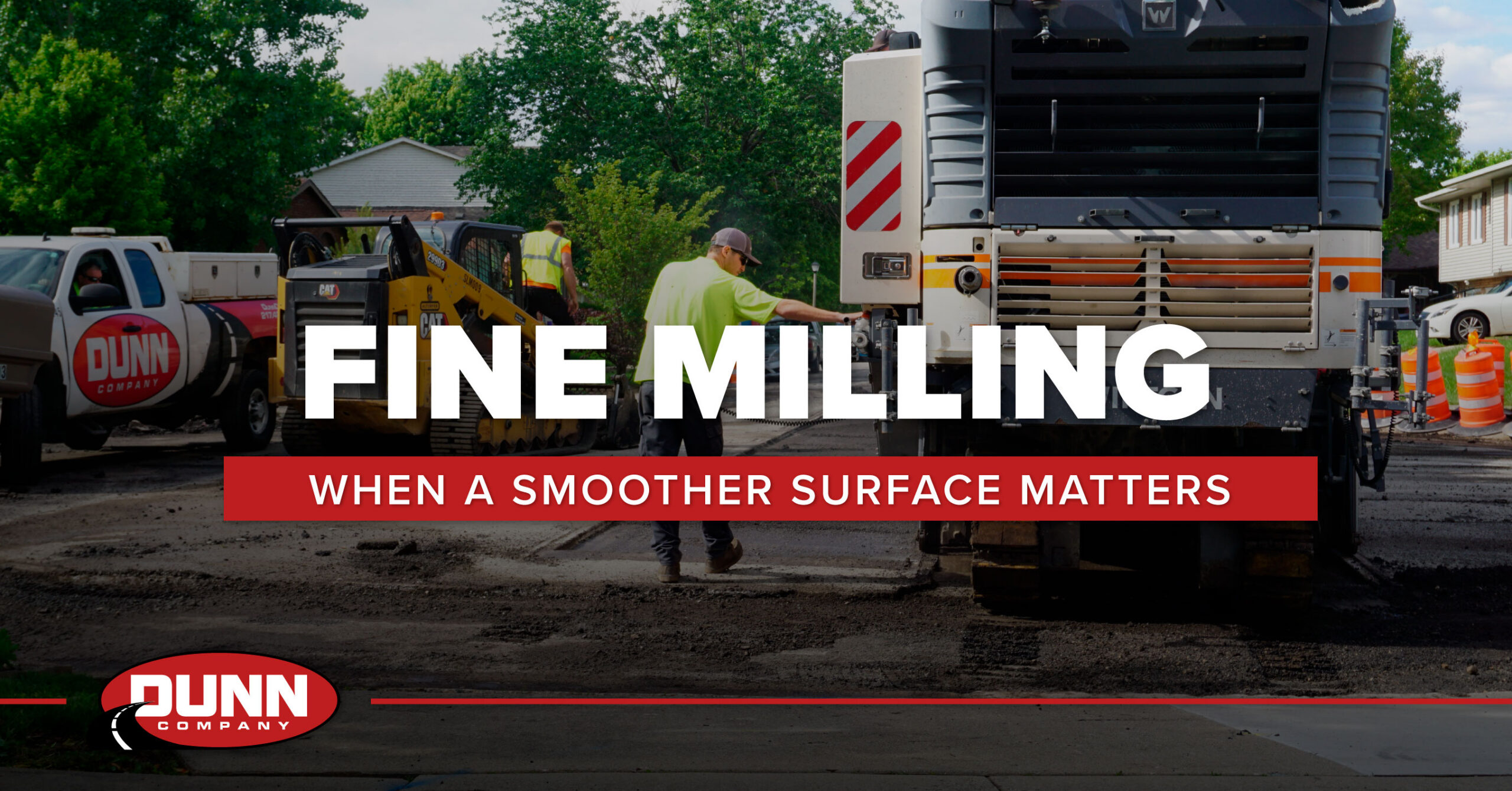
Fine Milling for Roadway Rehabilitation
Not every roadway improvement requires extensive pavement removal or a complete reconstruction. In some cases, the existing pavement remains suitable for rehabilitation but needs a smoother, more consistent surface before the next treatment can be applied.
That’s where fine milling can provide an effective solution.
Fine milling uses specialized milling equipment with closely spaced cutting teeth to create a tighter, more uniform surface pattern than conventional milling. For municipalities, county engineers, and roadway contractors, this capability offers another option when planning pavement improvements, correcting surface irregularities, or preparing roads for thin overlays and surface treatments.
Dunn Company offers fine milling using a specialized 8mm milling drum, providing a precise approach to pavement surface preparation.
What Is Fine Milling?
Fine milling is an asphalt milling process that uses a drum with closely spaced cutting teeth to remove pavement material while producing a relatively smooth, even finished surface.
The primary difference between fine milling and conventional milling is the spacing of the cutting teeth on the drum.
Dunn Company’s fine milling drum features 8mm tooth spacing across a 12-foot, 6-inch cutting width.
This close tooth spacing creates a tighter milling pattern, making it particularly useful for projects where the finished surface texture and consistency are important.
For agencies evaluating pavement rehabilitation options, understanding the equipment being used and the solutions they provide is an important part of selecting the appropriate process.
When Is Fine Milling the Right Application?
Fine milling is particularly useful when a roadway needs surface correction or preparation without requiring extensive pavement removal.
Dunn’s fine milling drum is well suited for milling depths of 2.5 inches or less, making it a practical option for shallower milling applications.
Several common project conditions may make fine milling worth considering.
1. Correcting Surface Bumps and Irregularities
Over time, pavement can develop bumps, uneven areas, and other surface irregularities that affect ride quality.
In some situations, these issues do not justify a complete milling operation across the entire roadway.
Fine milling can be used to address selected areas where surface correction is needed, creating a smoother and more even profile.
For agencies managing roadway maintenance budgets, this provides an additional rehabilitation option when the underlying pavement does not require more extensive work.
The key is determining whether the problem is primarily at the surface or whether deeper pavement conditions need to be addressed.
2. Preparing Pavement for Thin Asphalt Overlays
Thin asphalt overlays can be an effective pavement rehabilitation approach when existing roadway conditions support their use.
However, the condition of the surface beneath the new overlay matters.
Fine milling creates a closely spaced, consistent milling pattern that can help prepare existing pavement for a thin overlay.
Because thin overlays provide less thickness to accommodate irregularities in the underlying surface, proper preparation becomes especially important.
A smooth, uniform milled surface helps establish a more consistent starting point for the next paving operation.
3. Preparing Roads for Microsurfacing
Microsurfacing is a pavement preservation treatment used on suitable existing pavement.
Before application, agencies may need to address surface irregularities or prepare portions of the roadway to achieve the intended finished condition.
Fine milling can be used as part of that preparation process.
The tighter milling pattern provides a smooth, even surface that can support subsequent microsurfacing operations when the pavement and project specifications call for milling.
4. Preparing Pavement for Oil and Chip Treatments
Oil and chip, also known as chip seal, is another pavement maintenance and preservation option used on appropriate roadways.
Fine milling may be used before an oil and chip application when surface correction or preparation is needed.
By addressing bumps and irregularities before the treatment is applied, agencies can improve the condition of the surface receiving the next treatment.
As with other preservation methods, fine milling should be selected based on the existing pavement condition and the objectives of the project.
Fine Milling vs. Conventional Asphalt Milling
Both conventional milling and fine milling remove existing pavement material, but they serve different project requirements.
Conventional milling is commonly used for pavement removal, resurfacing preparation, and rehabilitation projects where a standard milled texture is appropriate.
Fine milling uses more closely spaced cutting teeth to create a tighter surface pattern.
The difference becomes particularly important when a project requires shallow surface correction or a relatively smooth finished milling profile.
| Consideration | Conventional Milling | Fine Milling |
| Cutting pattern | Standard tooth spacing | Closely spaced cutting teeth |
| Finished surface | More pronounced milling texture | Tighter, smoother milling texture |
| Common applications | Pavement removal and resurfacing preparation | Shallow surface correction and preparation for thin treatments |
| Milling depth | Depends on equipment and project requirements | Dunn’s 8mm drum is suited for depths of 2.5 inches or less |
| Project objective | Remove pavement to a specified depth | Remove pavement while producing a more uniform surface texture |
Neither method is universally better.
The appropriate milling approach depends on pavement conditions, removal depth, the desired finished surface, and the treatment that follows.
Why Surface Preparation Matters
A pavement treatment is only one part of a successful rehabilitation project.
The condition of the existing pavement, the preparation method, and the compatibility of the selected treatment all influence the finished result.
For example, applying a thin overlay over an uneven surface without appropriate preparation may leave underlying irregularities reflected in the finished pavement.
Similarly, surface treatments are not intended to correct every type of pavement problem.
Fine milling gives agencies and contractors another tool for addressing surface conditions before the next stage of work begins.
Its value is not simply in removing asphalt. It’s in creating a controlled, even surface that is appropriate for the planned rehabilitation method.
Does Every Roadway Need Fine Milling?
No. Fine milling is a specialized option, not a universal replacement for conventional milling or other pavement rehabilitation methods.
Before selecting fine milling, agencies should consider:
- Pavement condition: Are the problems primarily surface-related, or are there deeper structural concerns?
- Required milling depth: Is the removal depth appropriate for the fine milling equipment?
- Surface irregularities: Does the roadway need localized correction or a more extensive rehabilitation approach?
- Planned treatment: Will the roadway receive a thin overlay, microsurfacing, oil and chip, or another treatment?
- Project specifications: What surface profile, depth, and other requirements have been established by the agency or engineer?
These considerations help determine whether fine milling is an appropriate solution or whether another rehabilitation method is needed.
Dunn Company’s Fine Milling Capability
Dunn Company’s milling capabilities include specialized equipment designed for a variety of pavement preparation and rehabilitation applications.
Its fine milling drum features:
- 8mm tooth spacing for a tight, uniform milling pattern
- 12-foot, 6-inch cutting width
- Recommended applications at depths of 2.5 inches or less
- A smooth, even finished surface
- Applications involving thin overlays, microsurfacing, oil and chip preparation, and surface irregularity correction
This capability expands the options available to agencies and contractors evaluating how best to prepare existing pavement for its next stage of service.
Rather than treating every roadway condition with the same milling approach, the objective is to match the equipment and process to the actual project requirements.
Choosing the Right Milling Approach for Your Roadway
Effective pavement rehabilitation begins with understanding what the roadway needs.
Some projects require substantial pavement removal. Others may benefit from targeted surface correction or preparation before a thinner treatment is applied.
Fine milling provides an option for those applications, delivering a closely spaced milling pattern and smooth, even surface without automatically requiring a more extensive milling operation.
For municipalities, county engineers, and roadway contractors planning upcoming pavement rehabilitation projects, understanding when fine milling is appropriate can help inform the selection of the right construction method.
Planning a roadway rehabilitation or surface preparation project? Contact Dunn Company to discuss fine milling capabilities and the requirements of your upcoming work.
Frequently Asked Questions
What is the difference between fine milling and conventional asphalt milling?
The primary difference is the spacing of the cutting teeth and the resulting surface texture. Conventional milling generally produces a more pronounced milling pattern, while fine milling uses closely spaced teeth to create a smoother, more uniform surface. The appropriate method depends on pavement condition, required milling depth, and the planned rehabilitation treatment.
Is fine milling the same as micro milling?
No. Fine milling and micro milling use different cutting drum configurations. Dunn Company’s fine milling drum features 8mm tooth spacing, producing a tight, consistent milling pattern. This equipment is classified as fine milling rather than micro milling.
How deep can fine milling remove asphalt?
Dunn Company’s fine milling drum is well suited for applications requiring milling depths of 2.5 inches or less. The appropriate depth depends on the existing pavement condition, project specifications, and intended surface treatment.
When should an agency consider fine milling instead of conventional milling?
Fine milling may be appropriate when a roadway has surface bumps or irregularities but does not require extensive pavement removal. It can provide targeted surface correction and create a smooth, even surface before additional pavement treatments. Agencies should evaluate whether the roadway’s issues are primarily surface-related or involve deeper structural deterioration.
Can fine milling be used before thin overlays, microsurfacing, or oil and chip?
Yes. Fine milling can prepare existing asphalt pavement for thin overlays, microsurfacing, and oil and chip treatments when surface correction is needed. Its closely spaced cutting teeth create a consistent surface texture that can support subsequent treatments. The appropriate preparation method should always be determined by pavement conditions and project specifications.
Stay Connected
For more information and to stay up to date on projects, industry information, and construction methods, follow Dunn Company online on Facebook, Instagram, YouTube, and LinkedIn.