Managing Risk Below the Surface on Large-Scale Developments
Large-scale developments operate on tight schedules, significant budgets, and carefully coordinated timelines. Whether it’s a warehouse, distribution center, industrial facility, data center, renewable energy project, or major commercial development, dozens of moving parts must come together at the right time.
While many project risks are easy to see, some of the most consequential can be hidden below the surface.
Unstable soils, excessive moisture, insufficient bearing capacity, and changing site conditions can quickly affect access, productivity, material quantities, schedules, and costs. On projects spanning dozens or even hundreds of acres, relatively small problems can become significant when multiplied across the entire development.
Managing that risk starts with recognizing that ground conditions aren’t simply a sitework issue. They’re a project issue.
Small Problems Become Bigger at Scale
Scale changes everything.
A localized area of unsuitable soil on a small project may be relatively straightforward to address. Across a major development, inconsistent or poor soil conditions can affect thousands of square yards of working surface, roadways, parking areas, truck courts, staging areas, and future pavement.
The same is true for moisture. A weather event that creates a minor inconvenience on one site can significantly disrupt another when hundreds of workers, multiple contractors, and continuous equipment movement depend on reliable access.
These conditions can contribute to:
- Excessive undercutting
- Additional aggregate requirements
- Increased trucking
- Reduced equipment productivity
- Difficult construction access
- Weather-related downtime
- Unexpected material quantities
- Schedule disruptions
- Change orders
- Long-term pavement concerns
Individually, each may be manageable. Combined across a large development, they can have a much greater impact on the project.
Schedule Risk Starts Earlier Than You Think
On a large development, one delay rarely affects just one contractor.
Site preparation supports underground utilities. Utilities affect building construction. Construction access impacts material deliveries. Roadways and paved areas must eventually support both construction activity and permanent operations.
When poor ground conditions make portions of the site inaccessible or difficult to work on, the effects can move through the schedule.
Heavy equipment may struggle to operate efficiently. Trucks may be limited in where they can travel. Additional grading or material may be required. Work may need to stop while conditions improve.
That is why managing ground conditions early can have benefits far beyond the stabilization portion of the project. Creating reliable working platforms can help keep equipment, materials, and people moving when the schedule depends on it.
Weather Is More Than an Inconvenience
Weather will always be a variable in construction, but site conditions can determine how significantly it affects productivity.
Moisture-sensitive or weak soils can quickly deteriorate after rainfall, creating soft areas and limiting access for construction traffic. Repeated attempts to dry, grade, or replace unsuitable material can consume valuable time while other work waits.
Improving existing soils can help create more consistent working conditions and reduce the site’s vulnerability to changing weather.
The goal isn’t to eliminate weather risk. It’s to create a site that is better prepared to manage it.
Control Material and Transportation Risk
Traditional approaches to unsuitable soils can involve excavating existing material, hauling it off-site, importing aggregate or replacement material, placing it, and compacting it.
Sometimes that is the appropriate solution. But on a large development, the quantities involved can be substantial.
Every additional truckload introduces cost, scheduling, logistics, and availability considerations. When unexpected quantities increase across a large site, those impacts can add up quickly.
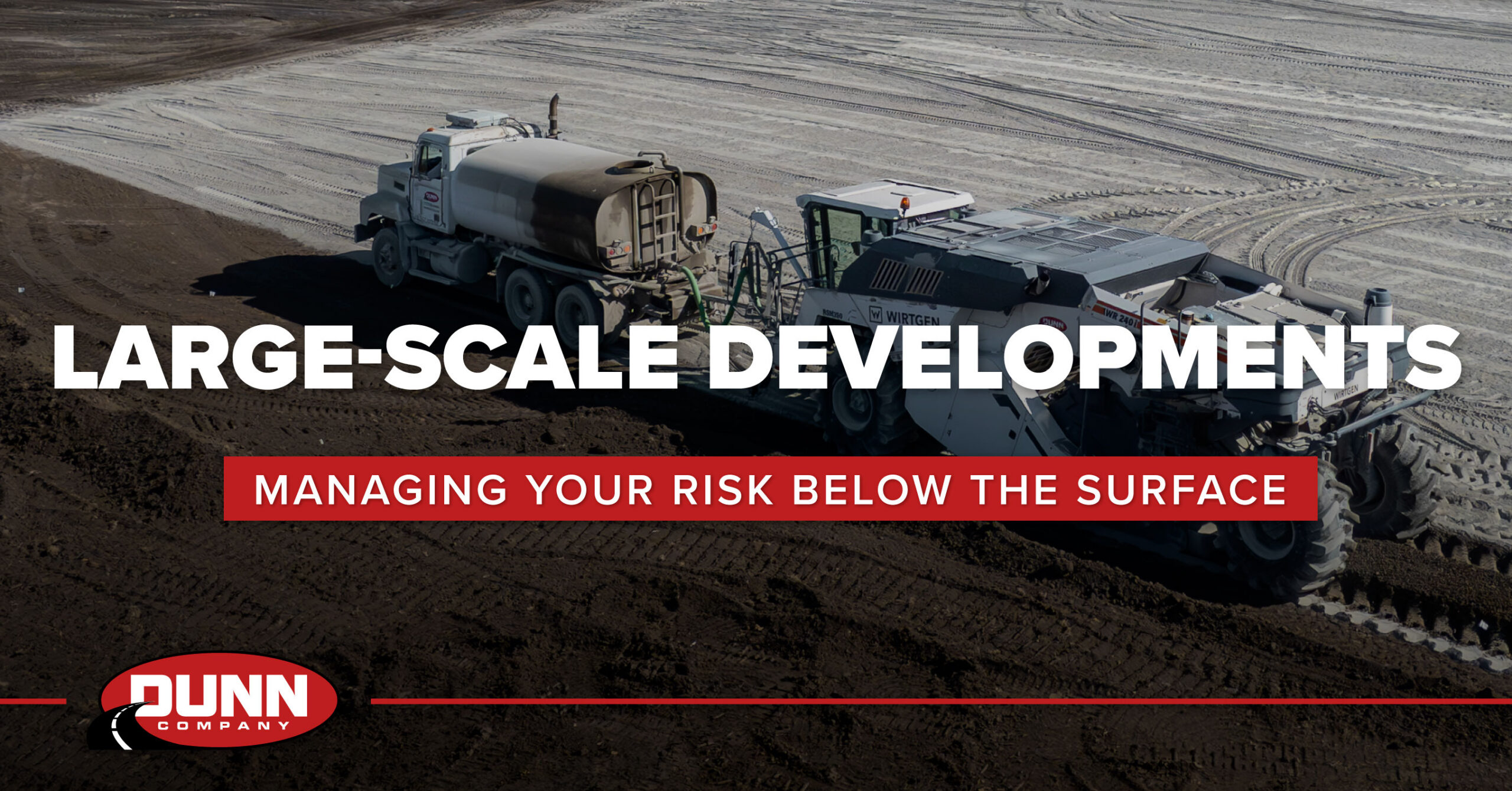
Soil stabilization can provide an alternative by improving existing materials in place. When site conditions and project requirements make stabilization appropriate, it can reduce the amount of material that needs to leave or enter the site while creating the strength required for continued construction.
The value isn’t simply using less material. It’s reducing another variable the project team has to manage.
Construction Access Is a Project-Wide Asset
Before a warehouse or industrial facility ever begins operations, its site may experience some of the heaviest traffic it will ever see.
Earthmoving equipment, concrete trucks, cranes, material deliveries, tractor-trailers, and contractors from multiple trades may depend on the same access routes and working areas.
Reliable access isn’t just convenient. It’s an asset that supports productivity across the project.
Stabilization can be used to develop working platforms and access areas capable of supporting construction traffic, helping crews move throughout the site and reducing interruptions caused by weak or inconsistent ground conditions.
When hundreds of people depend on the same site being workable, improving access can create benefits well beyond the initial site preparation.
Think Beyond Construction
Managing below-surface risk shouldn’t end when construction does.
The same ground will eventually support roadways, parking lots, loading areas, truck courts, equipment areas, and other infrastructure expected to perform for years or decades.
For warehouse, distribution, and industrial developments in particular, these surfaces may experience repeated heavy truck loads, turning movements, trailer staging, and concentrated loading.
If underlying conditions aren’t capable of adequately supporting those demands, problems can eventually appear at the surface through settlement, rutting, cracking, drainage issues, and premature pavement deterioration.
Addressing the conditions below the pavement during development helps protect the investment that will eventually be constructed above it.
Early Decisions Create More Options
One of the greatest advantages project teams have is time.
When potential soil challenges are identified early, developers, engineers, general contractors, and sitework teams have more opportunity to evaluate alternatives and determine the most appropriate solution.
Waiting until poor conditions are affecting production changes the conversation.
What could have been a planned construction strategy can become an immediate problem that needs to be solved while equipment, crews, and other contractors are waiting.
Early collaboration allows project teams to evaluate soil conditions, project requirements, anticipated loading, construction sequencing, and potential stabilization strategies before those conditions begin affecting the schedule.
The earlier risk is identified, the more options the project team has to manage it.
Stabilization Is a Risk Management Tool
Soil stabilization is ultimately about improving the engineering properties of existing soils. But on a large-scale development, its value can extend much further.
It can be part of a broader strategy to:
- Create more predictable working conditions
- Improve construction access
- Support heavy equipment and truck traffic
- Reduce reliance on imported materials
- Minimize excessive undercutting
- Reduce weather-related disruption
- Protect construction schedules
- Support long-term pavement performance
That makes stabilization more than another step in site preparation.
Used appropriately, it becomes a tool for creating greater certainty across the project.
Building Greater Certainty Into Large-Scale Development
No major construction project is without risk. The objective isn’t to eliminate every unknown; it’s to identify the variables that can be controlled and manage them before they become larger problems.
Ground conditions are one of those variables.
At Dunn Company, we work alongside developers, engineers, general contractors, and project teams to evaluate challenging site conditions and develop stabilization solutions around the needs of the project. From warehouses and industrial facilities to data centers, renewable energy projects, and other large-scale developments, our focus is on helping project teams create reliable conditions that support both construction and long-term performance.
When millions of dollars, multiple contractors, and critical schedules depend on the site beneath them, what happens below the surface deserves attention early.
Because managing risk before construction moves forward is always better than managing problems after they appear.
If you’re planning a large-scale development or facing challenging soil conditions, contact Dunn Company to discuss how stabilization can help reduce uncertainty and keep your project moving.
Frequently Asked Questions
Why are soil conditions a risk on large development projects?
Weak, unstable, or moisture-sensitive soils can affect construction access, equipment productivity, material requirements, schedules, and the long-term performance of pavement and infrastructure. On a large site, these impacts can become significant when repeated across many acres.
How can soil stabilization reduce project risk?
Stabilization improves existing soil conditions to create stronger, more reliable working surfaces. Depending on the project, this can help improve access, reduce excessive undercutting and imported material requirements, minimize weather-related disruption, and support long-term infrastructure performance.
When should soil stabilization be considered?
Potential stabilization needs should be evaluated as early as possible during planning and site development. Early evaluation gives project teams more time to understand conditions, compare alternatives, coordinate construction sequencing, and select the appropriate solution.
What types of large developments can benefit from stabilization?
Warehouses, distribution centers, industrial facilities, data centers, renewable energy developments, large commercial sites, and other projects involving extensive pavement or heavy construction traffic may benefit from stabilization when site conditions require it.
Can stabilization help keep construction on schedule?
When poor ground conditions are affecting access or productivity, stabilization can help create more reliable working platforms for equipment and construction traffic. This can reduce one source of uncertainty and help project teams maintain progress through challenging site conditions.
Stay Connected
For more information and to stay up to date on projects, industry information, and construction methods, follow Dunn Company online on Facebook, Instagram, YouTube, and LinkedIn.