
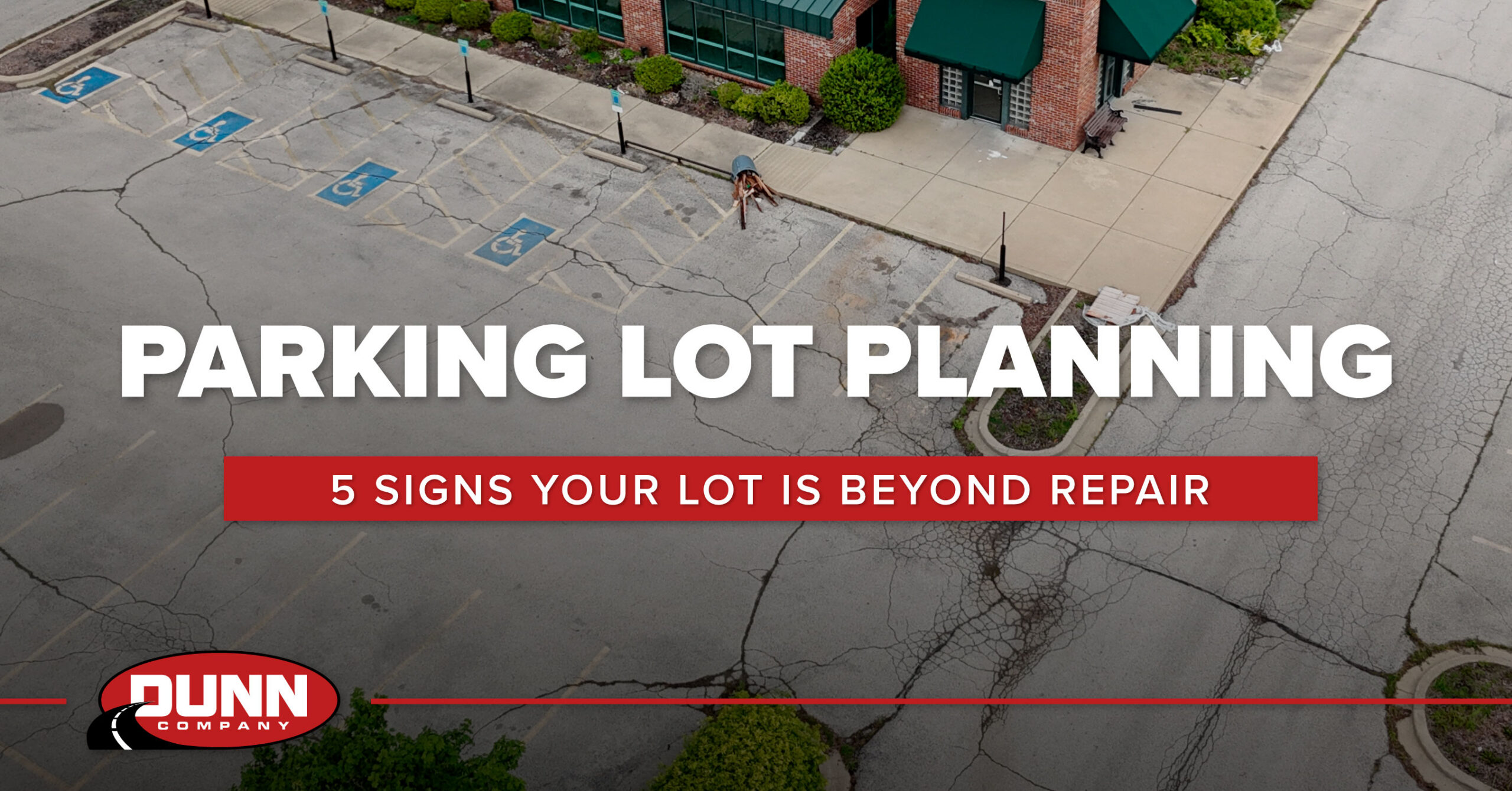
5 Signs Your Parking Lot Needs More Than Maintenance
For many businesses, a parking lot is one of the first things customers experience. It welcomes employees each morning, guides visitors to your front door, and supports daily operations year after year.
Like any investment, your asphalt pavement requires maintenance to perform its best. Services such as crack filling, sealcoating, and localized repairs can significantly extend pavement life when performed at the right time.
However, there comes a point when maintenance alone is no longer enough.
Knowing when a parking lot has moved beyond routine maintenance can help property owners avoid escalating repair costs, improve safety, and make more informed decisions about future improvements.
1. Widespread Cracking Covers Large Areas
A few isolated cracks are normal as pavement ages. In many cases, crack filling can effectively prevent water intrusion and extend the life of the pavement.
But when cracking becomes widespread across large sections of the parking lot, it may indicate deeper structural problems.
Common warning signs include:
- Extensive interconnected cracks
- Fatigue or “alligator” cracking
- Repeated cracking in the same locations after repairs
- Large areas with multiple crack patterns
These types of cracks often suggest that the pavement structure below the surface has begun to fail. In these situations, simply filling cracks may only provide a temporary cosmetic improvement.
2. Potholes Continue to Reappear
Potholes are often a symptom of underlying pavement deterioration.
Occasional pothole repairs are common. However, if potholes continue appearing in the same areas year after year, there may be issues such as:
- Base failures
- Moisture intrusion
- Poor drainage
- Loss of structural support
When this occurs, repeated patching can become increasingly expensive without solving the actual problem.
A more comprehensive rehabilitation strategy may provide a better long-term solution.
3. Drainage Problems Are Becoming More Frequent
Water is one of asphalt pavement’s greatest enemies.
If water is no longer draining properly and standing water remains after rainfall, your parking lot may be experiencing structural settlement or surface deformation.
Signs of drainage problems include:
- Standing water or ponding
- Depressions in the pavement surface
- Water flowing toward buildings or sidewalks
- Areas that remain wet long after rain events
Poor drainage accelerates pavement deterioration and can create safety concerns for pedestrians and vehicles alike.
Addressing drainage issues early can help prevent much larger problems in the future.
4. The Parking Lot Has Been Repaired Repeatedly
There comes a point when continual repairs become less cost-effective than larger rehabilitation efforts.
If your property has required:
- Frequent patching
- Annual crack repairs
- Multiple sealcoat applications on deteriorating pavement
- Ongoing emergency repairs
Now is the time to evaluate whether a resurfacing or reconstruction project would provide better long-term value.
Property owners often discover that investing in a larger improvement project can reduce future maintenance costs while providing a significantly improved appearance and performance.
5. Safety and Appearance Are Being Affected
Your parking lot plays a major role in the experience customers, tenants, employees, and visitors have at your property.
When pavement deterioration begins affecting safety or creating a negative first impression, maintenance alone may no longer be sufficient.
Warning signs include:
- Uneven surfaces creating trip hazards
- Extensive surface deterioration
- Poor ride quality
- Faded or difficult-to-maintain surfaces
- A worn appearance that detracts from the property
A revitalized parking lot not only improves safety but also demonstrates pride in your business and investment in your property.
The Right Solution Starts with the Right Evaluation
Every parking lot is different. Some surfaces can benefit from preventative maintenance, while others may require resurfacing, rehabilitation, or reconstruction to achieve long-term performance.
The key is understanding the condition of your pavement before small problems become major expenses.
At Dunn Company, we work with businesses, churches, schools, and property owners throughout Central Illinois to evaluate pavement conditions and recommend solutions designed for long-term success.
If your parking lot is showing signs of significant wear, now may be the right time to start the conversation.
Frequently Asked Questions
How do I know if my parking lot needs more than sealcoating?
If your parking lot has widespread cracking, recurring potholes, drainage problems, or areas of significant surface deterioration, maintenance alone may no longer be enough. A professional pavement evaluation can help determine whether resurfacing or reconstruction is the better long-term solution.
What is alligator cracking and why is it important?
Alligator cracking is a series of interconnected cracks that resemble the scales on an alligator’s skin. This type of cracking often indicates structural failure beneath the surface and is usually a sign that more extensive repairs are needed.
Can potholes be patched?
In some cases, yes. However, if potholes continue to reappear in the same locations, there may be underlying base or drainage issues that need to be addressed. Repeated patching without correcting the root cause often leads to additional repairs and expense.
What causes parking lots to fail?
The most common causes of parking lot failure include water intrusion, poor drainage, heavy traffic loads, aging pavement, inadequate maintenance, and underlying base failures.
How long should a commercial parking lot last?
The lifespan of a commercial parking lot depends on traffic volume, weather conditions, maintenance practices, and the quality of the original construction. With proper maintenance, asphalt parking lots can often provide decades of service.
How can I extend the life of my parking lot?
Routine crack filling, sealcoating, proper drainage management, and addressing minor issues before they become major problems are some of the best ways to maximize pavement life and reduce long-term costs.
How often should a commercial parking lot be inspected?
Property owners should inspect parking lots annually and after severe weather events. Regular inspections help identify developing issues early, allowing for more cost-effective maintenance and repairs.
How do I know which solution is right for my parking lot?
Every parking lot is different. The best way to determine the right solution is to have an experienced asphalt professional evaluate the pavement condition, drainage, traffic demands, and long-term goals for the property.
Stay Connected
For more information and to stay up to date on projects, industry information, and construction methods, follow Dunn Company online on Facebook, Instagram, YouTube, and LinkedIn.